
Mitte has one address built around pierogi, a Central Asian tea house that serves their closest cousins, and a handful of Polish kitchens a short ride away. Here is where to go, and what to order when you get there.
The short answer: Polish Dainty on Invalidenstraße
If you are in Mitte and want pierogi, head to Polish Dainty at Invalidenstraße 34, in the north of the district and within walking distance of Nordbahnhof and the Naturkundemuseum U-Bahn station. It is the neighbourhood’s dedicated pierogi address: dumplings made from a family recipe, and a mix-and-match menu that lets you build a plate of up to eight different kinds. That last detail is the reason to go. Instead of committing to one filling, you taste your way through the menu in a single sitting.
What to order
Build a mixed plate and balance it: two or three savoury fillings, then one sweet one to finish. The line-up has included spinach with feta, potato with bacon and a sweet filling of cottage cheese with vanilla, and much of the menu is vegetarian. Fillings change, so ask what is on today and let the staff steer you towards their favourites.
Take a dip or a sauce on the side and, if you are sharing, order one more portion than you think you need. Pierogi disappear quickly. The kitchen also works for takeaway, which turns a plate of dumplings into a picnic in the nearby Park am Nordbahnhof or along the Spree.
A short pierogi primer
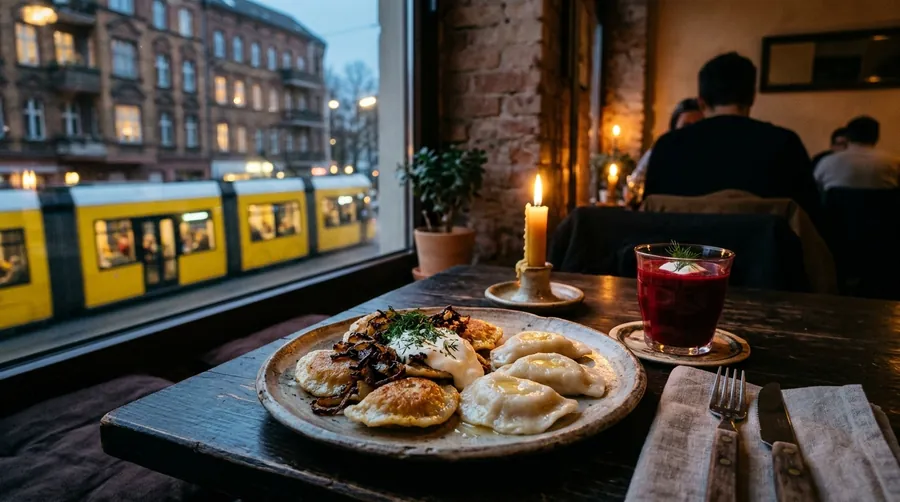
Pierogi are Poland’s half-moon dumplings: a thin, soft dough folded around a filling, boiled, and often finished in a pan with butter until the edges turn golden. The classic everyday version is ruskie, filled with potato, fresh curd cheese and onion. Sauerkraut with wild mushrooms belongs to the Christmas Eve table, meat fillings to Sunday lunch, and in summer the sweet versions arrive, filled with blueberries, strawberries or sweet cheese.
They are traditionally served with melted butter, fried onions or crisp bacon on top, and a spoon of sour cream on the side. Boiled pierogi are soft and delicate; fried ones have a crisp edge and a deeper flavour. If the menu offers both, try both.
A good pierogi is easy to recognise. The dough is thin and tender rather than thick and chewy, the edge is pinched and sealed so nothing escapes in the pot, and the filling is generous and well seasoned all the way to the corners. Handmade pierogi are rarely perfectly identical, and that small irregularity is a good sign: someone folded each one by hand.
The cousins in Mitte: vareniki and pelmeni
Pierogi have relatives all over Eastern Europe and Central Asia, and Mitte has a charming place to meet them. The Tadshikische Teestube sits in the KunstHof courtyard at Oranienburger Straße 27, a carpeted room with low tables and cushions, where tea is the centre of every visit. Its menu runs from Russian to Central Asian dishes and has included vareniki, the Ukrainian sibling of the pierogi, and pelmeni, small meat dumplings served with sour cream. It is a different evening from a pierogi plate on Invalidenstraße: slower, with pots of tea and plenty of conversation. The room is small, and the house recommends booking a few days ahead.
Worth the short ride: Polish kitchens beyond Mitte
If you have time for a U-Bahn ride, three more Polish kitchens are worth the trip.
- Mały Książę, Lilienthalstraße 6, Kreuzberg. A relaxed eatery and Polish grocery in one, with around a dozen kinds of pierogi, żurek (the sour rye soup) and shelves to take a taste of Poland home.
- Bistro Aleksandra, Schloßstraße 33, Charlottenburg. A Polish bistro on the street that leads to Charlottenburg Palace, serving its pierogi the classic way, with fried onions, cabbage and sour cream.
- Café Katulki, Friedelstraße 40, Neukölln. A cosy Polish café known for breakfast, cakes and pierogi, including vegan fillings.
Make a Mitte day of it
A pierogi lunch leaves plenty of room for dinner, and Mitte is home to some of the city’s great tables. Rutz on Chausseestraße earned Berlin its first three stars, Borchardt on Gendarmenmarkt is the classic brasserie of the capital, and Grill Royal on the Spree bank is where Berlin goes for steak. Our Berlin city guide has the full picture, from Kreuzberg to Charlottenburg.
Before you go
Small kitchens change their hours, menus and holidays more often than big restaurants, so check the current hours before you go, especially on Sundays and public holidays. Some older lists online still name addresses that have since moved on, so rely on a recent listing. And come hungry: the best way to judge a pierogi kitchen is a mixed plate, eaten hot.
Try it
Gourmet Weekend PlannerPick a city, one to three days, your pace and your budget.Tipping GuideEnter the bill and the country.Frequently asked questions
Where is the best place for pierogi in Mitte, Berlin?
Polish Dainty at Invalidenstraße 34 is the dedicated pierogi address in Mitte, with a mix-and-match menu of savoury and sweet fillings, up to eight kinds per plate.
Are there vegetarian pierogi in Mitte?
Yes. Many classic fillings are meat-free, from potato and curd cheese to spinach and feta, and much of the menu at Polish Dainty is vegetarian. If you eat vegan, ask about the dough and the toppings before you order.
What is the difference between pierogi, vareniki and pelmeni?
Pierogi are Polish half-moon dumplings, vareniki are their close Ukrainian relative, and pelmeni are small Russian dumplings, usually filled with meat and served with sour cream or in broth.
Do I need to book?
Opening hours and booking policies change, so check the current details before you go. The Tadshikische Teestube in the KunstHof recommends reserving a few days ahead.